

The Mani Peninsula Greece feels like stepping into another world – one where medieval tower houses pierce dramatic landscapes and ancient caves hold secrets beneath the earth. We’ve explored every corner of this wild southern Peloponnese region, and honestly, it’s unlike anywhere else in Greece. Here, rugged mountains plunge into turquoise waters, while stone villages seem frozen in time since the Byzantine era.
This isn’t your typical Greek island paradise. The Mani is raw, authentic, and utterly captivating. From the mystical Diros caves with their underground lakes to the haunting beauty of Vathia’s tower houses, every turn reveals something extraordinary. We’re sharing everything you need to know about exploring this remarkable peninsula, from practical travel tips to hidden gems only locals know about.
Understanding the Mani Peninsula: Geography and Character
The Mani Peninsula extends like a finger into the Mediterranean, forming the middle prong of the Peloponnese’s three peninsulas. We always tell visitors that the Mani is divided into two distinct regions: the Inner (Mesa) Mani in the south and the Outer (Exo) Mani in the north, each with its own character and attractions.
Inner Mani: The Wild Heart
The Inner Mani feels almost otherworldly. Here, the landscape becomes increasingly barren and dramatic as you head south toward Cape Tenaro – mainland Europe’s southernmost point. This region remained largely autonomous throughout history, creating a unique culture of clan warfare and fortress-like tower houses that still dominate village skylines today.
Outer Mani: Gateway to Adventure
The Outer Mani serves as your introduction to the peninsula, with slightly lusher landscapes and easier access to amenities. Kardamyli, our favorite base for first-time visitors, sits beautifully between mountains and sea, offering the perfect blend of Maniot culture and tourist infrastructure.
🏛️ Local Insider Tip
The Maniots have a saying: “A Maniot is born free and dies free.” This fierce independence shaped everything from their architecture to their cuisine. When locals offer you tsitsiravla (wild greens) or syglino (cured pork), they’re sharing centuries of survival wisdom from this harsh but beautiful land.
Best Places to Visit in Mani Peninsula Greece
We’ve spent countless hours exploring the Mani’s villages, beaches, and historical sites. Each destination offers something unique, from the fortress-like atmosphere of Vathia to the underground wonders of the Diros cave system.
Vathia: The Crown Jewel of Tower Architecture
Nothing prepares you for your first glimpse of Vathia. This clifftop village, with its cluster of medieval tower houses rising like ancient skyscrapers, represents the Mani’s architectural heritage at its most dramatic. Most towers date from the 17th-19th centuries, built by feuding clans who needed both homes and fortresses.
Walking through Vathia feels like exploring a ghost town – many towers stand empty, their stone walls weathered by centuries of Aegean winds. Yet this abandonment adds to the village’s haunting beauty. We recommend visiting during golden hour when the limestone glows against the deep blue sea.
Diros Caves: Underground Wonderland
The Diros cave system ranks among Greece’s most spectacular natural attractions. These limestone caves, formed over millions of years, create an underground labyrinth of chambers connected by crystal-clear lakes. Your 25-minute boat tour through Vlychada Cave reveals stalactites and stalagmites reflected in mirror-like waters.
The caves maintain a constant 18°C temperature year-round, making them perfect for summer escapes. Book ahead during peak season – only small boats can navigate these narrow waterways, limiting daily visitors.
Kardamyli: Literary Haven
This coastal town gained international fame as Patrick Leigh Fermor’s adopted home, where the celebrated travel writer spent his final decades. Kardamyli perfectly balances authentic Maniot character with modern amenities, making it our top recommendation for first-time visitors.
The old town, built amphitheatrically on hillside terraces, showcases traditional stone architecture without the fortress-like severity of deeper Mani villages. Excellent tavernas serve local specialties while hiking trails lead into the dramatic Taygetos mountains.
Unique Maniot Architecture and Tower Houses
The Mani’s tower houses aren’t just architectural curiosities – they’re physical manifestations of a unique social system. These stone fortresses, some reaching four stories high, served multiple purposes: family homes, grain storage, and defensive positions during the frequent clan wars that characterized Maniot society.
Construction and Features
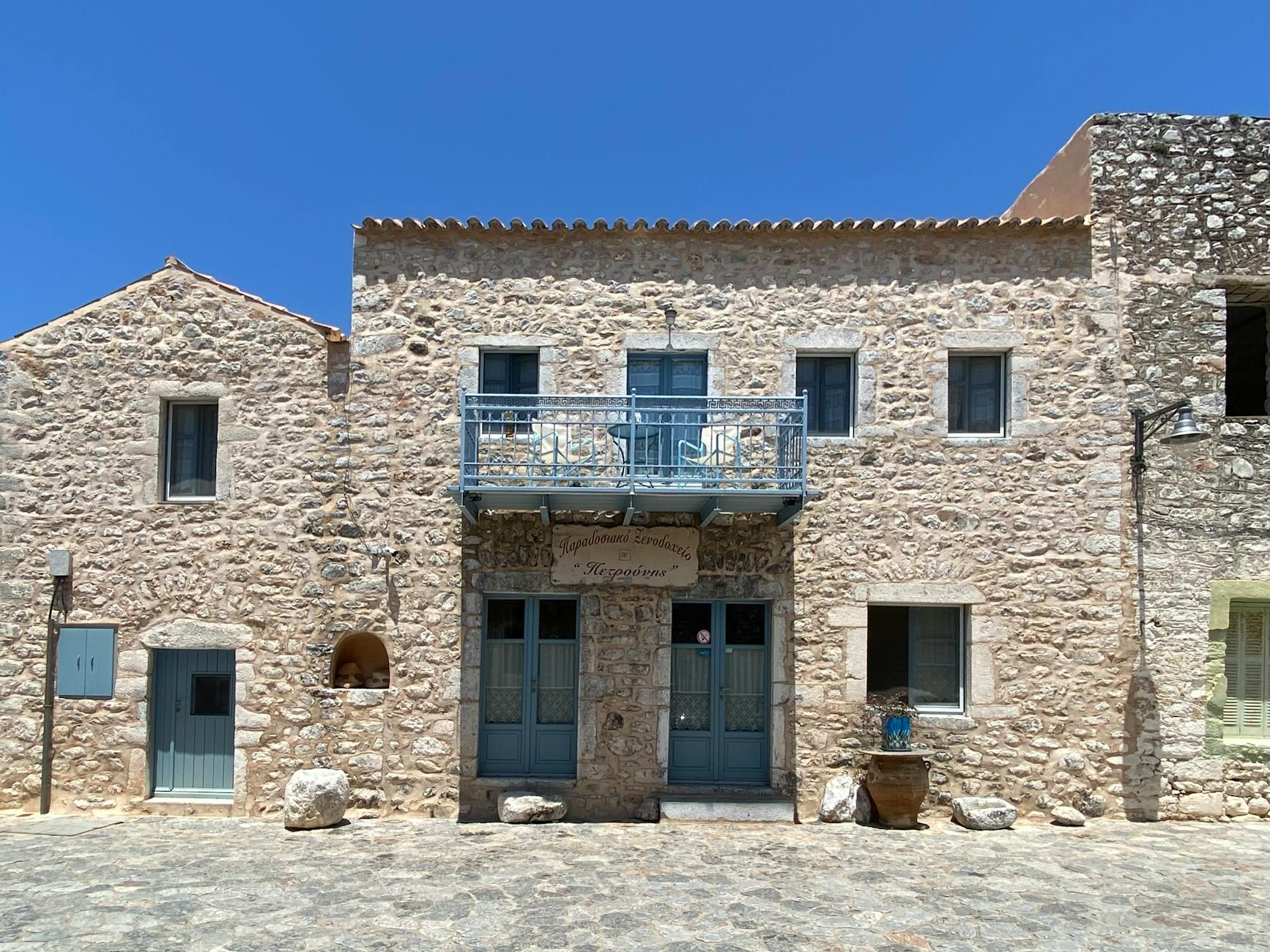
Most towers were built using local limestone, stacked without mortar in a technique that’s proven remarkably durable. Narrow windows minimize vulnerability while thick walls (often over a meter wide) provide both insulation and protection. The ground floor typically housed animals and supplies, while families lived on upper levels.
Notable Tower Complexes
Beyond Vathia, impressive tower clusters exist in Kitta, Nomia, and Flomochori. Each village developed its own architectural variations, though the basic defensive concept remained constant. Some towers have been restored as guesthouses, offering unique accommodation experiences.
Best Beaches and Coastal Attractions
The Mani’s coastline offers stunning variety, from sheltered bays perfect for swimming to wild shores where waves crash against dramatic cliffs. Unlike Greece’s famous islands, Mani beaches often feel wonderfully uncrowded, even in summer.
Stoupa Beach
This golden sand beach near Kardamyli offers excellent swimming conditions and sufficient infrastructure for comfortable day trips. The bay’s protection from north winds makes it reliable even when other beaches face rough conditions. Several tavernas serve fresh seafood right on the sand.
Foneas Beach
For those seeking drama over comfort, Foneas delivers wild beauty. This pebble beach sits beneath towering cliffs, accessible only via a steep hiking trail. The effort rewards you with crystalline waters and complete solitude – we’ve never seen more than a handful of people here.
Cape Tenaro
Standing at mainland Europe’s southernmost point feels profound. Ancient Greeks believed this rocky cape marked the entrance to Hades, and the desolate landscape certainly evokes otherworldly feelings. Ruins of Poseidon’s temple add historical significance to the geographical milestone.
Planning Your Mani Peninsula Adventure
Success in the Mani requires different planning than typical Greek destinations. This region rewards preparation while punishing assumptions based on other parts of Greece.
Transportation Essentials
Rent a car – there’s no practical alternative for exploring the Mani properly. Mountain roads can be narrow and winding, but they’re generally well-maintained. GPS sometimes struggles with remote villages, so download offline maps as backup.
Most visitors base themselves in Kardamyli, Stoupa, or Areopoli, then take day trips to more remote areas. This strategy provides comfortable accommodation while maximizing exploration time.
Accommodation Options
Traditional guesthouses in restored tower houses offer authentic experiences, though amenities may be basic. Beach hotels in Kardamyli and Stoupa provide modern comfort with easy coastal access. Book well ahead for summer visits – the Mani’s limited accommodation fills quickly.
Budget travelers can find rooms from €45-65/night, while luxury tower house conversions command €120-200/night. Kardamyli accommodation offers the best variety for first-time visitors.
🍽️ Local Insider Tip
Try pastitsada – the Mani’s signature pasta dish with wild boar or goat. Many recipes have been passed down unchanged for centuries. The best versions use pasta made from local wheat and meat from animals that graze on wild herbs, creating flavors you won’t find anywhere else in Greece.
Cultural Experiences and Local Traditions
Maniot culture remains remarkably distinct from mainstream Greek traditions. This fierce independence created unique customs, from architectural styles to culinary specialties that reflect centuries of self-reliance.
Traditional Crafts and Industries
Stone carving remains an active tradition, with local artisans still building and restoring tower houses using ancient techniques. Olive oil production follows methods unchanged since Byzantine times, creating intensely flavored oils from indigenous olive varieties.
Festivals and Celebrations
Village festivals (panigiri) offer authentic cultural immersion. The Assumption celebration in Vathia (August 15th) brings the ghost village briefly back to life as diaspora families return for traditional feasting and dancing.
Practical Travel Information
The Mani rewards visitors who come prepared for its unique challenges and opportunities.
Best Time to Visit
April through June offers perfect conditions – mild temperatures, blooming wildflowers, and uncrowded attractions. September and October provide excellent alternatives with warm swimming conditions and harvest-season cultural events. Summer can be intensely hot, though coastal areas remain pleasant. Winter brings dramatic beauty but limited services.
What to Pack
Sturdy walking shoes are essential for exploring tower villages and coastal trails. Sun protection becomes critical in this landscape with limited shade. Swimming gear extends your options at remote beaches. A good camera captures the dramatic interplay of stone architecture and wild landscapes.
Getting There
Most visitors arrive via Kalamata airport, then drive 1-1.5 hours to reach the Mani. Athens requires a longer but scenic 3.5-hour drive through the heart of the Peloponnese. Route planning should account for mountain driving conditions and fuel stops.
Frequently Asked Questions
How many days do you need to explore the Mani Peninsula?
We recommend minimum 4-5 days to see major highlights like Vathia, Diros caves, and Kardamyli. A full week allows deeper exploration including remote villages and hiking trails in the Taygetos mountains.
Is the Mani Peninsula suitable for families with children?
Yes, though with considerations. Beach areas like Stoupa work well for families, while tower villages require supervision due to unfenced heights and ruins. The Diros caves fascinate children but require sitting still in small boats.
Can you visit the Mani Peninsula without a car?
Public transportation exists but severely limits your options. Bus service connects major towns but doesn’t reach many remote villages and beaches. We strongly recommend renting a car for any serious Mani exploration.
What’s the difference between Inner and Outer Mani?
Outer Mani (around Kardamyli) offers more tourism infrastructure and gentler landscapes. Inner Mani (Vathia, Cape Tenaro) provides wilder, more dramatic scenery with fewer amenities but greater authenticity.
Are the tower houses in the Mani Peninsula open to tourists?
Most tower houses remain private property or ruins, but several have been converted to museums or guesthouses. Some villages offer guided tours explaining the architecture and history. Always respect private property signs and local customs.
Photo credits: Lydia Griva via Pexels. All images used under the Pexels license.